the story behind lina bo bardi’s legendary glass easels, now on view at venice art biennale
designboom unpacks lina bo bardi's radical device for exhibition displays, which first landed at the MASP museum in são paulo, in 1968.
prefer designboom on google[FEATURED]
lina bo bardi (1914-1992) and her legendary glass easels
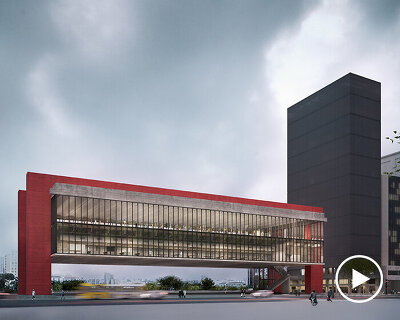
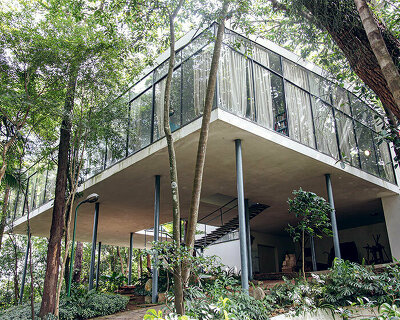
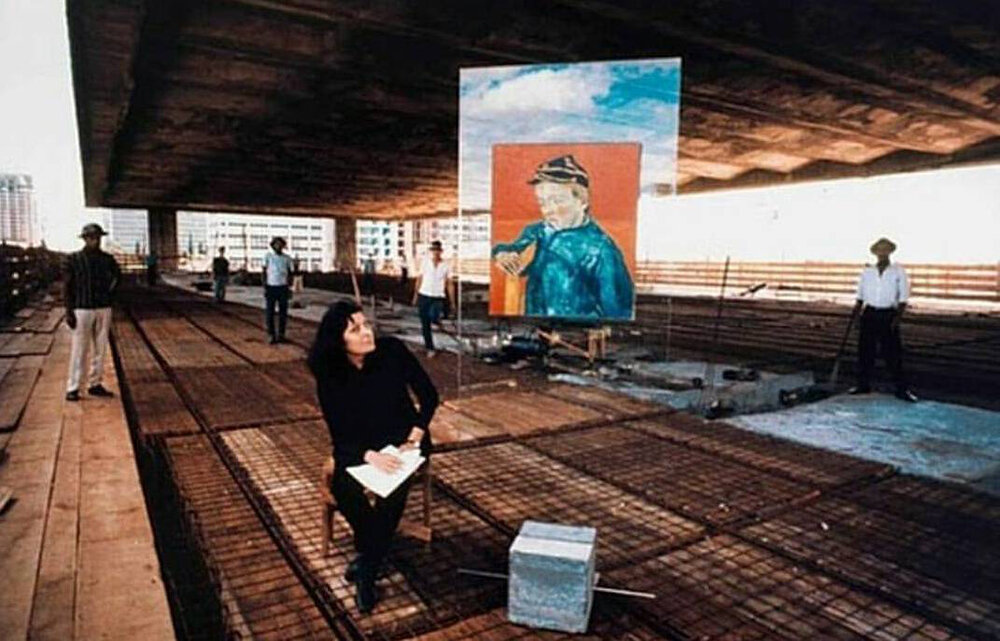
Lina Bo Bardi (1914-1992), born Achillina Bo, was an Italian-Brazilian modernist architect who devoted her career to promoting the social and cultural potential of architecture and design. Her most iconic works include the Museu de Arte de São Paulo Assis Chateaubriand (MASP) and the SESC Pompéia, both housed in the same city. But Lina Bo Bardi’s genius reaches beyond the scope of architecture. After moving to Brazil in 1964, she turned her curiosity toward furniture, jewelry, curation, and set design, inspiring her to create the legendary glass easels for exhibition displays. Now on view at the 2024 Venice Art Biennale, this historical archetype — made of glass panels and concrete blocks — was originally conceived for MASP’s picture gallery and first introduced in 1968 at the inauguration of the museum’s headquarters on Paulista Avenue.
‘Bo Bardi’s system was influenced by Franco Albini’s exhibition displays at the Pinacoteca di Brera in Milan in the 1940s and inspired the Louvre-Lens’s Galerie du Temps, designed by SANAA, which opened in 2012. This is the first time the work of Lina Bo Bardi is presented at Biennale Arte,‘ shares VAB curator Adriano Pedrosa.
creating a radical system for exhibition displays at masp
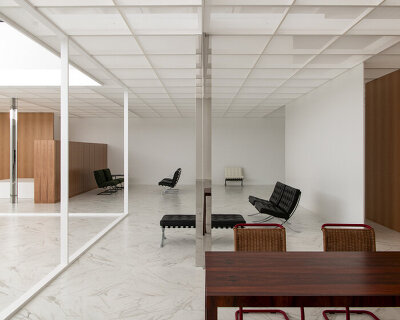
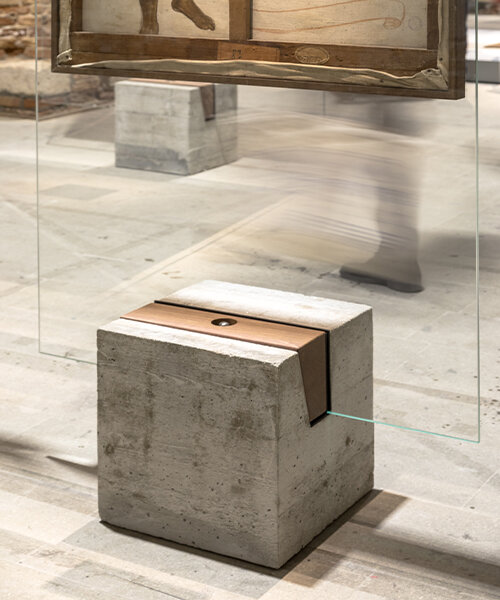
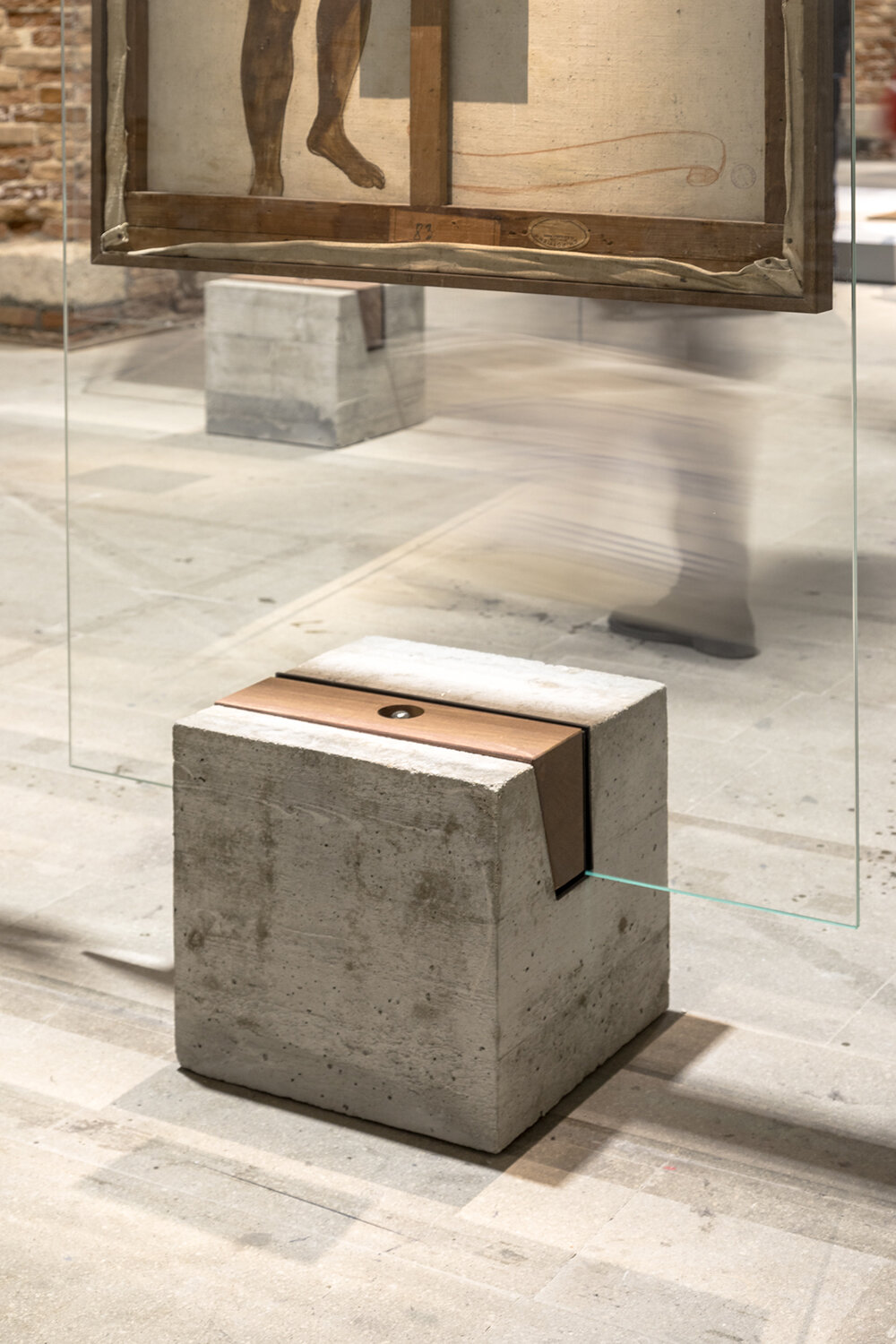
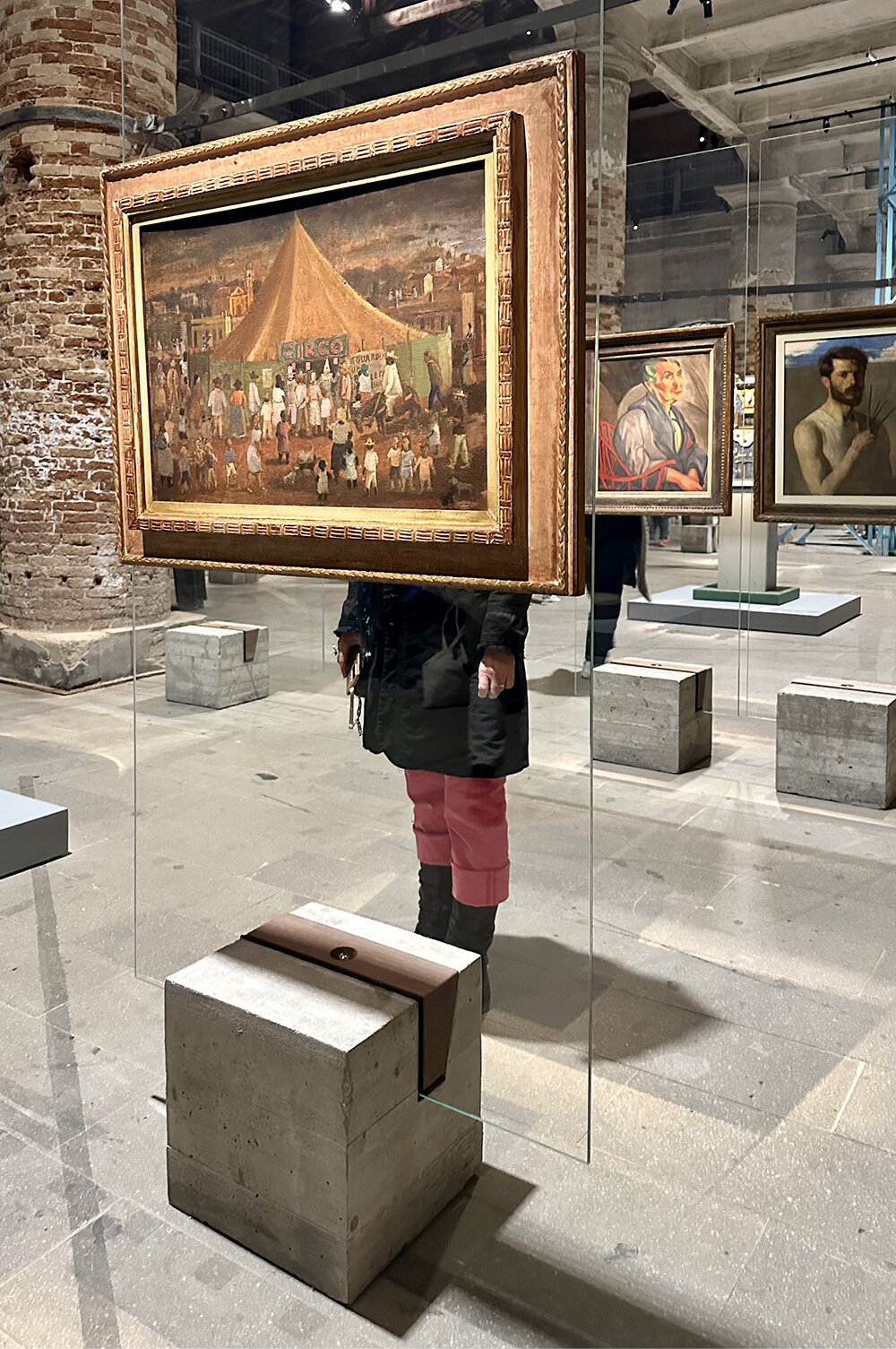
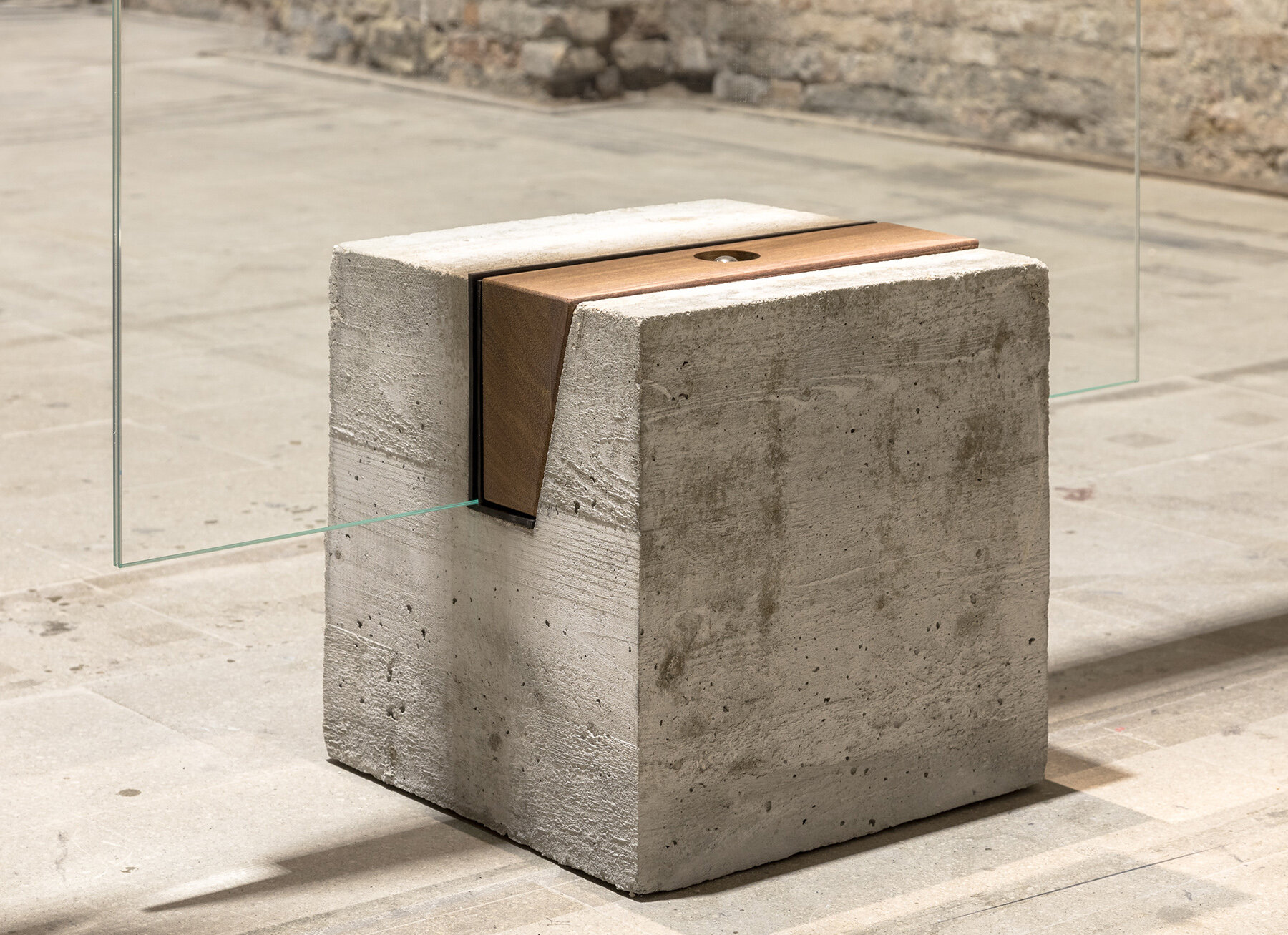
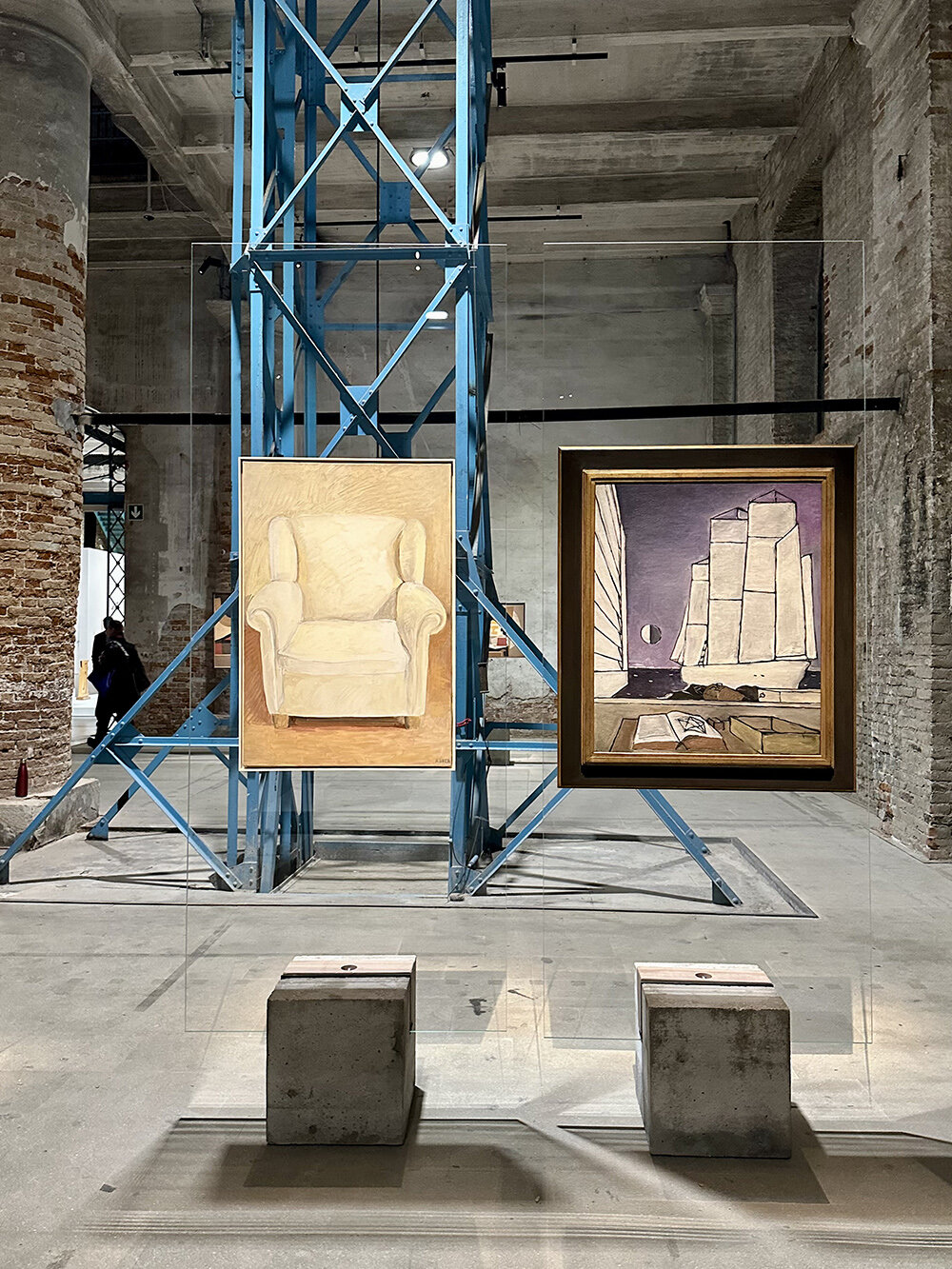
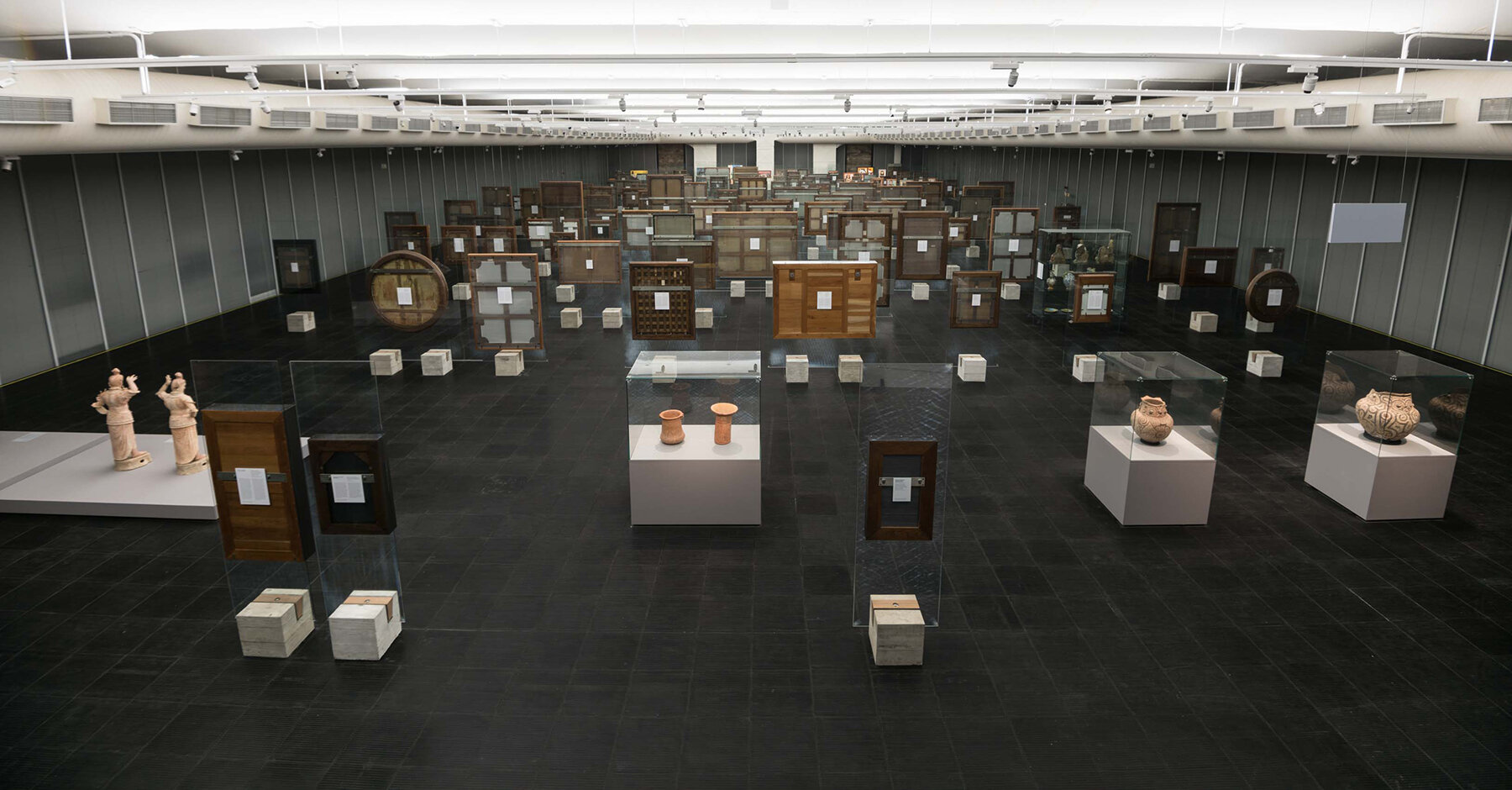
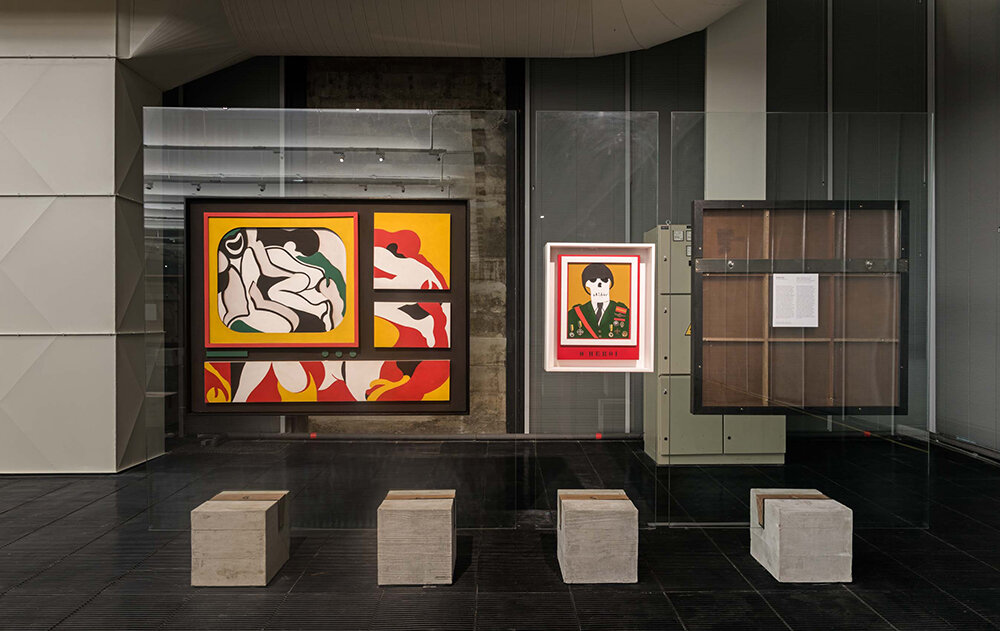
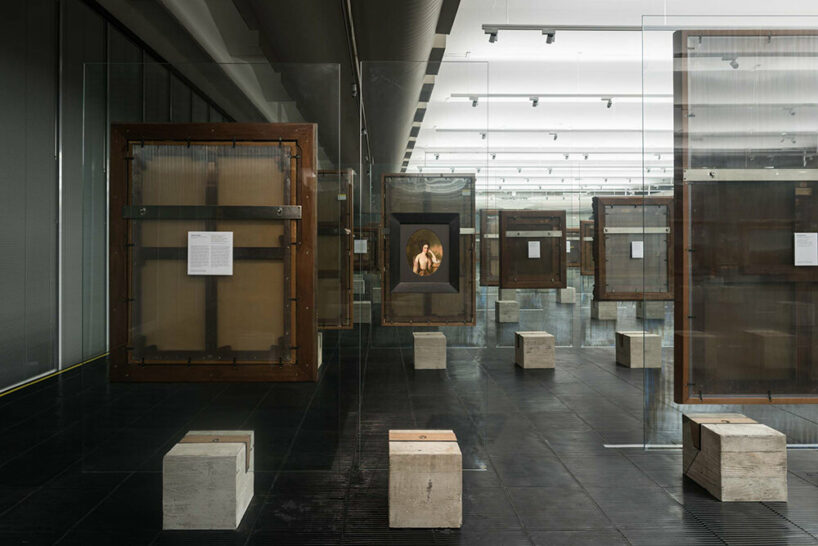
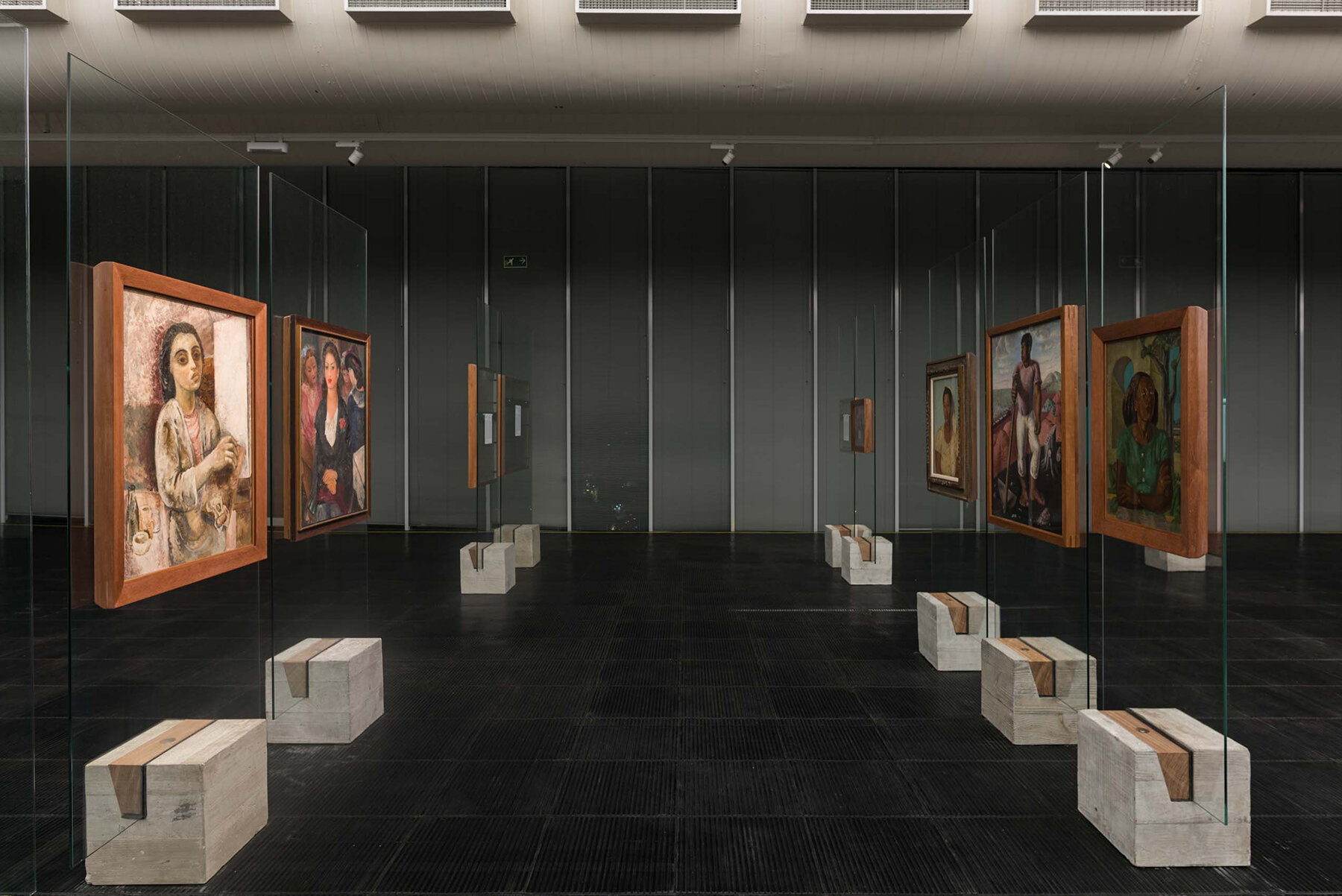
Replaced in 1996 by partitioned walls, Lina Bo Bardi’s glass easels were brought back to MASP in 2015 for the launch of the museum‘s long-term exhibition, dubbed Collection in Transformation. The permanent show takes over the spacious second-floor gallery, where the legendary glass easels are arranged in rows without partitions, each displaying an artwork from MASP’s collection. Carrying a radical aesthetic, the device consists of a thick glass panel wedged into a concrete block to create a self-supporting structure onto which one can hang pictures and paintings. The labels are installed on the back of the easels so that the visitors can directly encounter the artworks, free from context and information about authorship, title, and date.
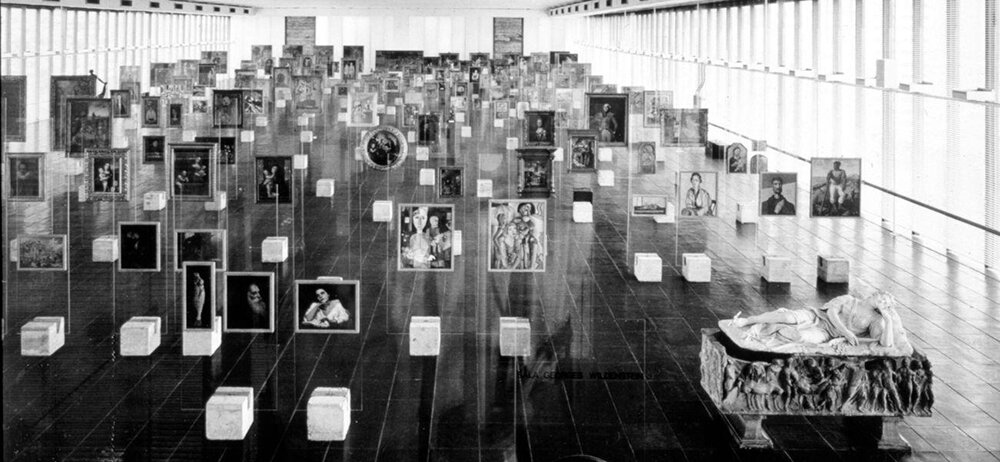
Removing the works from the walls and placing them on easels allows for a closer encounter between the public and the artworks. On the easels, the works appear suspended in the air, and in a wide, wall-less gallery, visitors walk through a kind of ‘forest’ of paintings. The public is led to create its paths, allowing for unexpected juxtapositions and dialogues between African, Brazilian, Latin American, and European art. The open, fluid, transparent, and permeable gallery offers multiple possibilities for access and interpretation, eliminates hierarchies and predetermined routes, and invites viewers to engage with diverse art stories. ‘Rough, raw, and industrial materials were employed in both the building’s construction and the easels, which function as a counterpoint to the museum’s refined classical European collection,’ adds Pedrosa.
reproducing the glass easels at the venice art biennale
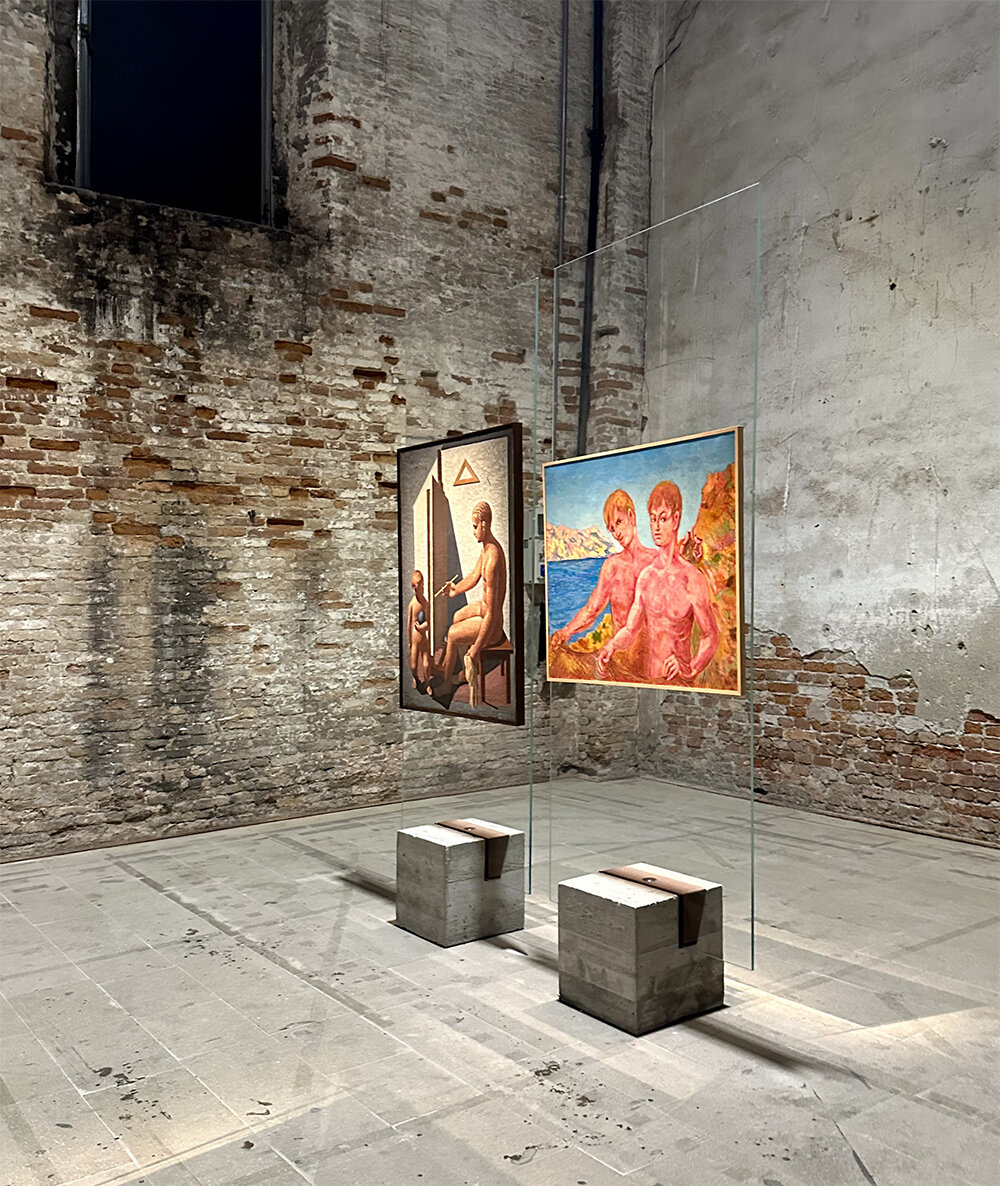
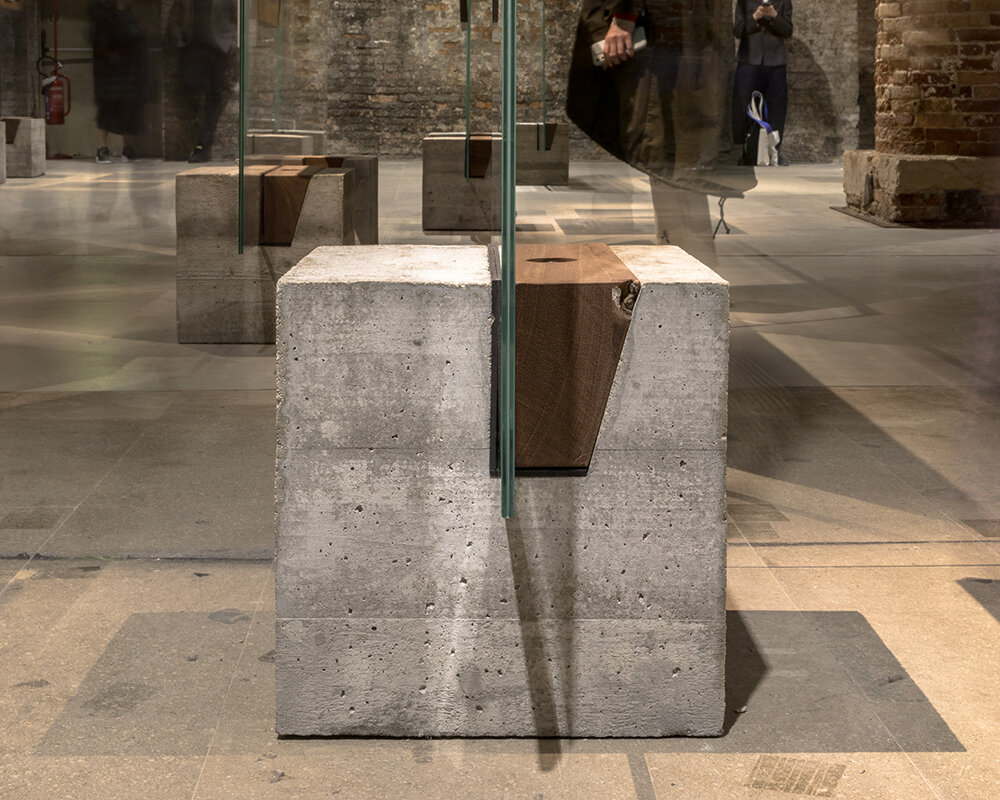
Lina Bo Bardi’s radical system for displaying artworks found its way to the Venice Art Biennale, as part of the program’s main exhibition (Stranieri Ovunque – Strangers Everywhere), which runs until November 24, 2024. The 1968 archetype has been carefully reproduced using concrete, glass, wood, neoprene and stainless steel, with the authorization of the Instituto Bardi | Casa de Vidro. Sizes vary between 240 × 75cm; 240 × 100cm and 240 × 150cm; 240 × 210cm. Similarly to MASP, visitors encounter the displayed works in a partition-less space, free of hierarchies and unnecessary distractions. Despite never having had her work featured at previous Biennale Arte editions, the late architect won the Biennale Architettura’s Gold Lion for Lifetime Achievement back in 2021.
project info:
name: Glass easels
designer / architect: Lina Bo Bardi | @institutobardi
launch year: 1968
program: Venice Art Biennale | @labiennale
on view until: November 24, 2024

shop
your own online design shop — no sales commission collected